AI in Video Game Development: Smarter Worlds, Faster Pipelines, New Creative Power

AI in Video Game Development: Smarter Worlds, Faster Pipelines, New Creative Power
Introduction: How AI Is Rewriting Video Game Development in the 2020s
The journey of ai in video game development has been nothing short of remarkable. What started with rudimentary pathfinding algorithms in the 1990s—think A* navigation in games like Diablo—has evolved into sophisticated systems that can generate entire worlds, craft dynamic narratives, and learn from player behavior in real time. By 2024-2026, the transformation accelerated dramatically, with BCG estimating that approximately 50% of game studios now incorporate generative ai in production or prototyping workflows.
Essential viewing: How AI is transforming every aspect of modern game development.
The evidence is everywhere. No Man's Sky continues to amaze players with its procedurally generated universe spanning 18 quintillion planets, each with unique terrain, flora, and fauna. Middle-earth: Shadow of Mordor pioneered the Nemesis system, where non player characters remember past interactions, form hierarchies, and evolve based on player encounters. Latitude's AI Dungeon demonstrated how large language models could enable infinite text-based narratives, parsing player inputs for contextually coherent story branches.
This article explores three critical angles of ai in game development: the in-game ai systems that players interact with directly, the behind-the-scenes ai tools reshaping how development teams build games, and the broader creative and industry impact on jobs, workflows, and ethics.
Key points covered:
How modern ai agents power smarter npcs and adaptive gameplay
The role of procedural generation and generative ai tools in world building
AI-powered development pipelines for coding, art, audio, and testing
Career implications and best practices for game studios embracing ai

Two Minute Papers explores how AI is revolutionizing game development.
What "AI in Video Game Development" Really Means Today
When we talk about artificial intelligence in the video game industry, we need to distinguish between two fundamentally different approaches. Traditional game ai relied heavily on heuristics, behavior trees, and finite state machines—deterministic systems that game designers could precisely control. Modern ai and machine learning, by contrast, encompasses supervised learning for pattern recognition, reinforcement learning for policy optimization, and generative models like diffusion networks for image creation or transformers for text.
In 2026, video game development ai operates on two distinct pillars. The first is runtime ai—systems executed on player hardware for non playable characters, pathfinding, and procedural content generation. These demand low-latency determinism, especially in multiplayer environments where any desync could break the experience. The second is production ai—offloaded to cloud or dev machines for asset creation, automated testing, and player analytics.
Historical milestones illustrate this evolution clearly. Pac-Man's ghosts in 1980 used pure scripting with chase, ambush, and scatter patterns. F.E.A.R. in 2005 introduced squad ai that employed cover systems and flanking maneuvers. Left 4 Dead's AI Director in 2008 pioneered adaptive difficulty by monitoring player performance metrics. And DeepMind's AlphaStar in 2019 achieved grandmaster-level play in StarCraft II through deep learning and self-play iterations.
Key distinctions to understand:
Scripted ai offers predictability and low compute needs; learning ai provides adaptability but requires high training costs
Handcrafted content delivers polish; procedural generation enables scalability and replayability
Static difficulty ensures fairness; adaptive balancing increases player engagement but risks over-tuning
Behavior trees use hierarchical node structures for decision making; utility systems use weighted scoring for action selection
Smarter NPCs and Adaptive Gameplay
For most players, npc behavior represents the most visible application of ai systems in games. The way enemies react, allies assist, and bystanders respond to player actions fundamentally shapes how immersive a game world feels. Between 2014 and 2024, several titles pushed the boundaries of what's possible.
Shadow of Mordor's Nemesis system (2014) created orcs that advance ranks, bear scars from defeats, and taunt returning protagonists with personalized dialogue. Red Dead Redemption 2 (2018) layers utility ai atop behavior trees for over 1,000 unique non player characters exhibiting daily routines, reputation tracking, and moral responses—where honor systems influence shop prices and mission availability. Halo Infinite (2021) employs goal-oriented action planning (GOAP) for enemies prioritizing objectives like flanking or reviving allies. Alien: Isolation (2014) showcases fear-driven xenomorph ai using sensor fusion to stalk unpredictably, forcing stealth over combat.
"In 2026, 90% of U.S. developers integrate AI workflows, tripling dynamic content via tools like Google Cloud's Vertex AI."
The techniques powering these systems have matured considerably. Creating npcs that feel alive requires combining multiple approaches. Behavior trees provide modular actions (patrol → detect → pursue). GOAP enables planning sequences like "reach cover → suppress fire → call reinforcements." Utility curves balance aggression versus caution based on health and distance. Reinforcement learning is starting to appear in commercial prototypes, training ai agents via simulated episodes to optimize rewards like survival time.
Adaptive gameplay amplifies these foundations. Left 4 Dead's AI Director samples from probability distributions tied to player vitals for horde intensity. F.E.A.R. and Halo foes memorize player strategies, countering grenade spam with dodges or preemptive flashes. Nemesis-style memory persists across sessions via cloud saves, ensuring that players interact with a game world that remembers them.
Core mechanics powering smarter NPCs:
Behavior trees for modular, hierarchical decision making logic
GOAP for goal-driven planning and action sequencing
Utility ai for dynamic priority weighting based on context
Reinforcement learning for training agents on sparse reward signals
Emotion simulation tracking reputation, fear, and loyalty
Memory systems that persist player encounters across sessions
CPU budget constraints (typically 5-10% on consoles) requiring hybrid approaches
Technical limitations remain significant. Consoles cap ai at 5-10% CPU allocation. Multiplayer demands seed-based determinism to sync states across human players. Studios hybridize simple rules with distilled machine learning models (exported via formats like ONNX) to maintain efficiency while delivering smarter npcs.
Sebastian Lague's Coding Adventures — brilliant visual explanations of AI pathfinding and procedural generation.
Procedural Worlds, Dynamic Stories, and Generative Content
Procedural content generation has roots stretching back to Rogue-like dungeon algorithms in the 1980s, but modern implementations have scaled to remarkable complexity. No Man's Sky (2016, with major updates through 2024) uses seed-based algorithms to craft planets with biome-specific environments—Voronoi partitioning for continents, L-systems for flora branching—generating 18 quintillion unique locations players can explore.
Rules-based procedural generation works through layered techniques. Perlin noise gradients create terrain heightmaps with octave layering for fractal realism. Shape grammars assemble quests following patterns like "village → bandit attack → rescue." Tile-set constraints via waveform collapse ensure Dead Cells-style roguelites maintain proper pacing with controlled boss-room density.
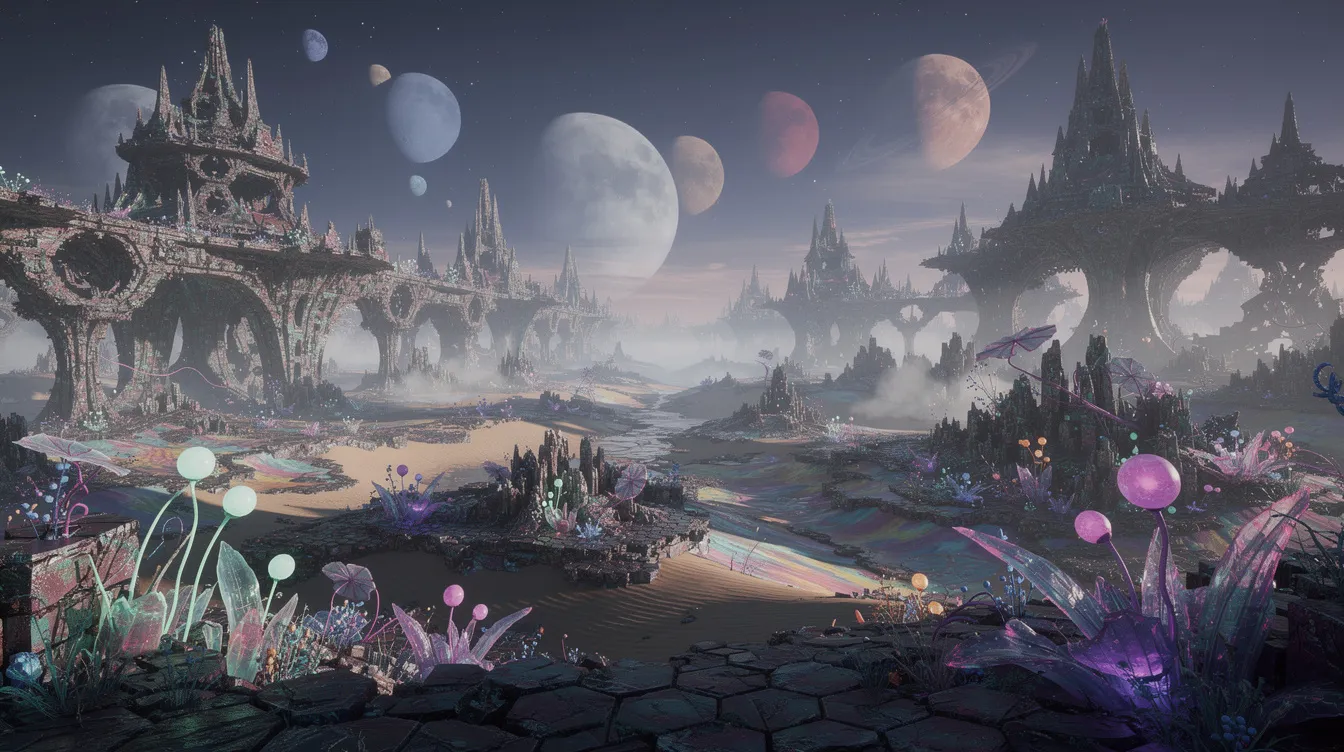
Post-2022, generative ai tools revolutionized this space. Stable Diffusion fine-tuned on game art generates textures—NVIDIA Canvas upscales 512x512 images to 4K. Ubisoft's Ghostwriter (2023) generates over 10,000 npc barks contextually. AI Dungeon leverages GPT models for branching narratives, achieving 90% coherence in short sessions while struggling with long-term lore consistency.
Concrete use cases for procedural and generative content:
Terrain generation using noise functions and voxel-based rendering
Flora and fauna variation via genetic algorithms mimicking evolution
Dungeon layouts with graph-based systems ensuring solvable paths
Quest assembly through grammar systems and constraint satisfaction
Texture creation via diffusion models with style matching
Dynamic dialogue generation using large language models
Event and encounter pacing controlled by ai directors
The pros include slashing art time by up to 70% (per Unity reports), enabling near-infinite replayability through parameter tweaks, and allowing small games to offer vast content. The cons are real: bland repetition if seeds lack diversity, lore breaks in LLM outputs, and template over-reliance yielding what critics call "procedural slop." Human creativity still delivers emotional peaks that ai struggles to match—scripted setpieces like those in The Last of Us retain impact that procedural systems cannot yet replicate.
GDC Talk: How AI is shaping the future of game design and player experiences.
AI-Powered Tools Behind the Scenes: Coding, Art, Audio, and Testing
The biggest shift in game development between 2023 and 2026 isn't what players see—it's what happens in studio pipelines. Ai tools now integrate directly into standard game engines like Unreal Engine and Unity, transforming how development teams approach every phase of production.
For coding and scripting, tools similar to GitHub Copilot autocomplete C# and C++ gameplay scripts, cutting boilerplate by 55% and reducing prototyping time from weeks to days. Roblox's 2023-2024 generative suite includes Code Assist for Lua, boosting creator output substantially. These ai copilots handle repetitive tasks like raycast mechanics, state serialization, and pathfinding tweaks, allowing developers to focus on creative output. For Roblox developers building AI-driven gameplay systems, our Luau scripting patterns guide covers the clean architecture foundations that make AI behavior trees and state machines maintainable at scale.
Code and scripting tasks AI handles:
Gameplay script autocompletion and suggestion
Pathfinding algorithm implementation
State machine serialization
Bug pattern detection and fixing bugs in common scenarios
Blueprint logic assistance in visual scripting
For art and assets, diffusion models have become standard for concept art generation and texture upscaling. Midjourney creates initial concepts, ControlNet handles style transfer matching concept to in-engine renders, and normal map generation from heightfields accelerates environment art. However, 2023-2025 brought controversies around dataset copyright—Steam's 2023 disclosure rules now require games to identify ai-generated content amid ongoing lawsuits over LAION-5B datasets scraping billions of images without consent.
Art and asset tasks AI handles:
Concept art generation and iteration
Texture creation and upscaling to 4K
Style matching across asset libraries
Material generation for PBR workflows like the Adellion Forge pipeline
Environment asset variation
Audio and voice workflows have also transformed. Procedural engines like FMOD integrate with GANs for ambient layers—wind varying by biome velocity, dynamic environmental soundscapes. Voice synthesis via ElevenLabs enables rapid dialogue prototyping, though SAG-AFTRA strikes in 2023-2024 pushed back against unlicensed cloning, resulting in consent clauses limiting samples to 10-minute clips.
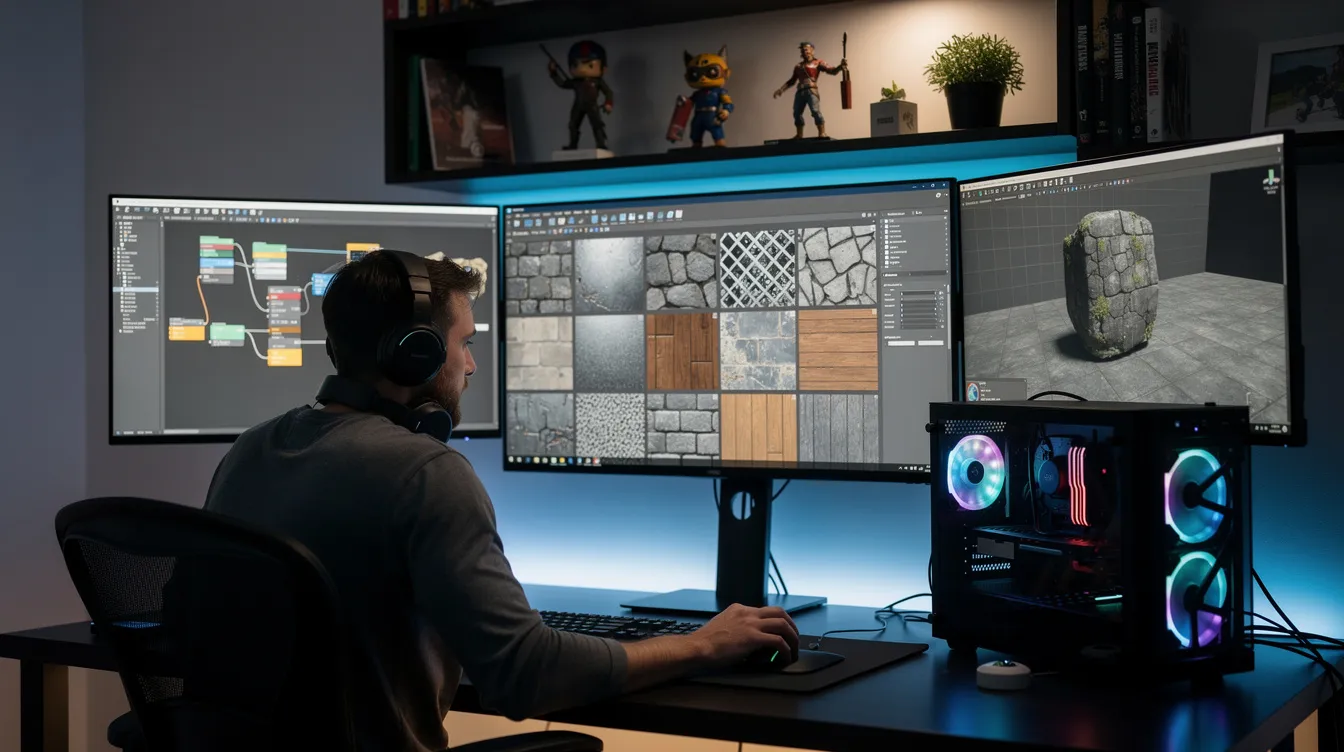
Testing and QA leverage reinforcement learning agents that simulate thousands of playthroughs per hour to uncover exploits like speed glitches in platformers. Unity's ML-Agents (with 1.2 million North American downloads) accelerates level design by 40%. Epic's Fortnite uses RL bots for economy balancing, reducing manual QA by 40% while ensuring comprehensive regression coverage through coverage-guided fuzzing.
Player Analytics, Personalization, and Live Service Balancing
Data-driven design has shaped free-to-play and live-service games since around 2015, but ai has made player behavior analysis dramatically more granular by 2024-2026. Studios now deploy sophisticated systems that model individual players and adapt experiences in real time.
Player modeling uses unsupervised machine learning for clustering—k-means algorithms on session data reveal that explorers linger twice as long in side areas compared to competitors rushing objectives. Churn prediction via XGBoost achieves 85% accuracy on features like login streaks and session length, allowing developers to intervene before players leave.
Personalized experiences manifest across multiple game systems. Adaptive difficulty in racing games scales ai lap times by Elo-like ratings. Loot systems in titles like Destiny 2 favor drop rates for underused classes. Tutorial hints activate based on player intent signals—Celeste's assist mode triggers after 50 deaths on a section. These create responsive environments that match personalized challenges to individual skill levels.
Live operations leverage multi-armed bandit algorithms for pricing optimization, achieving 5% uplift in retention through dynamic cosmetic pricing. Event timing uses time-series forecasting to maximize player engagement. Metrics show DAU retention improvements of 18% and LTV increases of 12% via ai balancing.
Analytics and personalization systems:
Behavioral clustering identifying player archetypes
Churn prediction models with 85% accuracy
Adaptive difficulty scaling based on performance
Dynamic loot and reward distribution
Economy balancing through reinforcement learning
Event scheduling optimization via forecasting
Highlight detection for streaming and esports
Ethical trade-offs remain significant. Engagement rises 25% with these systems, but risks include dark patterns like whale targeting. Surveys show 15% player backlash when personalization feels manipulative. Esports tools like Mobalytics use neural networks for highlight reels from Twitch streams, enhancing viewer experience without crossing into unfair advantage territory.
Jobs, Skills, and Shifting Studio Power Dynamics
Between 2020 and 2026, ai has fundamentally changed roles inside game studios. The trend moves toward hybrid positions: ai gameplay programmers blending C++ with reinforcement learning expertise, data scientists parsing telemetry with SQL and PyTorch, tools engineers integrating APIs like OpenAI into game editors.
Concerns peaked in 2022-2024. Artist layoffs at major studios amid Midjourney adoption sparked union responses—organizations like IWGB demanded ai clauses in contracts. Writers worried about LLMs replacing dialogue work. Junior programmers faced automation of entry-level tasks that previously served as training grounds.
However, the "creative at center" trend has empowered smaller teams dramatically. Citizen Sleeper (2022), largely solo-built using Ink for narrative and Unity tools, demonstrates what one creator can accomplish. Steam data from 2025 shows 22% of 20,004 releases disclosed ai assistance, up significantly from 2023, enabling tiny development teams to compete with larger game studios.
For game designers and aspiring developers, NVIDIA's ACE suite now powers lifelike non playable characters in over 50 U.S. titles, achieving 99% natural language accuracy via cloud inference. This shifts the skill requirements for anyone entering the field.
Skills aspiring developers should build:
Strong foundations in C++, C#, and Python (80% of job requirements)
Understanding of behavior trees via tools like Unreal BT editor
Reinforcement learning basics using Gymnasium environments
Data visualization with Tableau or similar platforms
Portfolio projects showcasing ai-driven systems or tooling
Familiarity with neural networks and deep learning fundamentals
Computer science fundamentals including algorithms and data structures
The practical reality: allowing developers to focus on creative decisions while ai handles repetitive tasks means those who can direct and refine ai outputs become more valuable than those who only execute predetermined solutions.
Challenges, Ethics, and Best Practices for Using AI in Games
Embracing ai in the games industry raises real issues that studios must address thoughtfully. Dataset licensing remains murky—training data often includes copyrighted material without clear consent. Bias in player models can create unfair experiences. Job displacement threatens workers who built the industry. Privacy concerns around player data collection grow as systems become more sophisticated.
Content originality and copyright questions intensified after Valve/Steam's 2023 disclosure requirements. Public debates continue around scraped art in training datasets like LAION-5B, which included 5 billion images without explicit consent. Opt-out datasets like HaveIBeenTrained attempt to mitigate scraping concerns, but legal frameworks remain unsettled.
Labor and credit require transparent studio policies. SAG-AFTRA's 2023-2024 strikes resulted in consent clauses for voice work, limiting licensing to 10-minute samples. Studios setting clear ai usage guidelines—crediting ai-assisted work without erasing human contributors—build trust with both employees and audiences.
Player trust and fairness present additional challenges. Ai-based cheat detection, matchmaking, and aim-assist tools help maintain fair competition, but opaque systems can feel arbitrary or invasive. Elo inflation accusations in games like Valorant demonstrate how algorithmic decision making can undermine confidence when players can't understand the systems governing their experience.
Best practices for responsible AI use:
Implement data minimization—collect only what's necessary
Maintain human-in-the-loop review for narrative and player-facing systems
Clearly disclose ai use where it affects player experience
Establish internal governance for ai experimentation
Ensure consent for voice and likeness use
Credit ai-assisted work transparently
Provide opt-outs for telemetry collection (EU 2024 mandates)
Real-World Examples of AI-Driven Games and Tools
Grounding these concepts in specific, dated examples helps illustrate how ai has moved from isolated experiments to production-ready components across the video game industry.
Middle-earth: Shadow of Mordor / Shadow of War (2014-2017) pioneered systemic npc behavior through the Nemesis system. Using hierarchical simulation with over 100 orc traits, it solved the static enemy problem that plagued open-world games. Orcs form relationships, remember defeats, and evolve vendettas. Critics noted repetition in extended play, but the innovation inspired countless imitators and demonstrated how ai could create emergent narratives without scripting.
No Man's Sky (2016, major updates through 2024) tackled procedural generation at unprecedented scale. Seed-based algorithms using Perlin noise, Voronoi partitioning, and L-systems generate entire worlds with unique flora and fauna across 18 quintillion planets. Initial criticism about asset repetition drove Hello Games to refine systems—2024's Worlds Part I update added ai-refined fauna behaviors and 7 billion procedurally placed assets. The lesson: procedural content generation works best as a foundation enhanced by iteration.
AI Dungeon (2019) demonstrated LLM-powered interactive fiction, enabling players to pursue any narrative direction through natural language input. Built on GPT models, it achieved 90% coherence in short sessions but struggled with long-term lore consistency and faced moderation challenges in 2021 that led to content restrictions. It proved the potential and limitations of generative text for game creation simultaneously.
Ubisoft's Ghostwriter (publicly discussed 2023) generates npc barks 10x faster than manual writing, easing localization across dozens of languages. While critics worry about blandness replacing distinctive writing, it demonstrates production ai's role in handling volume without eliminating human oversight for key dialogue.
DeepMind's AlphaStar (2019) achieved grandmaster-level play in StarCraft II through reinforcement learning, training on millions of replays and self-play iterations. It beat professional human players 10-1, inspiring research into complex strategy learning. However, computational demands exceeding consumer hardware meant it remained a research milestone rather than a commercial feature—highlighting the gap between cutting-edge ai research and real world applications in shipped products.
Key lessons from these case studies:
Hybrid approaches combining rules with machine learning scale best
Disclosure and iteration build trust when systems fall short
Computational constraints still limit what ships to players
Human oversight remains essential for quality and moderation
Innovation often comes from small teams willing to experiment
The Future of AI in Video Game Development (2026 and Beyond)
Market projections paint an ambitious picture. The ai in games market was valued at USD 3.73 billion in 2026, projected to reach USD 10.71 billion by 2030 at 30.2% CAGR. Alternative forecasts suggest growth to USD 81.19 billion by 2035 at 33.57% CAGR, with mobile games holding 42-50% market share and procedural content generation as the fastest-growing application.
Near-term advances will likely include wider integration of large language models directly in game clients. On-device models (like quantized Llama 3 variants) could run on next-generation consoles and PCs, enabling dynamic environments where npc conversations and quest variations generate locally without cloud dependency. More sophisticated ai directors controlling pacing, weather, and story beats simultaneously seem achievable by 2028-2030.
The concept of "ai-native" new games—titles designed from the ground up around ai systems—gains traction. Imagine experiences where each playthrough is truly unique but constrained by authored narrative arcs and world rules, where dynamic environments respond to player behavior patterns learned over hundreds of hours, and where even the game dev process itself is partially automated.
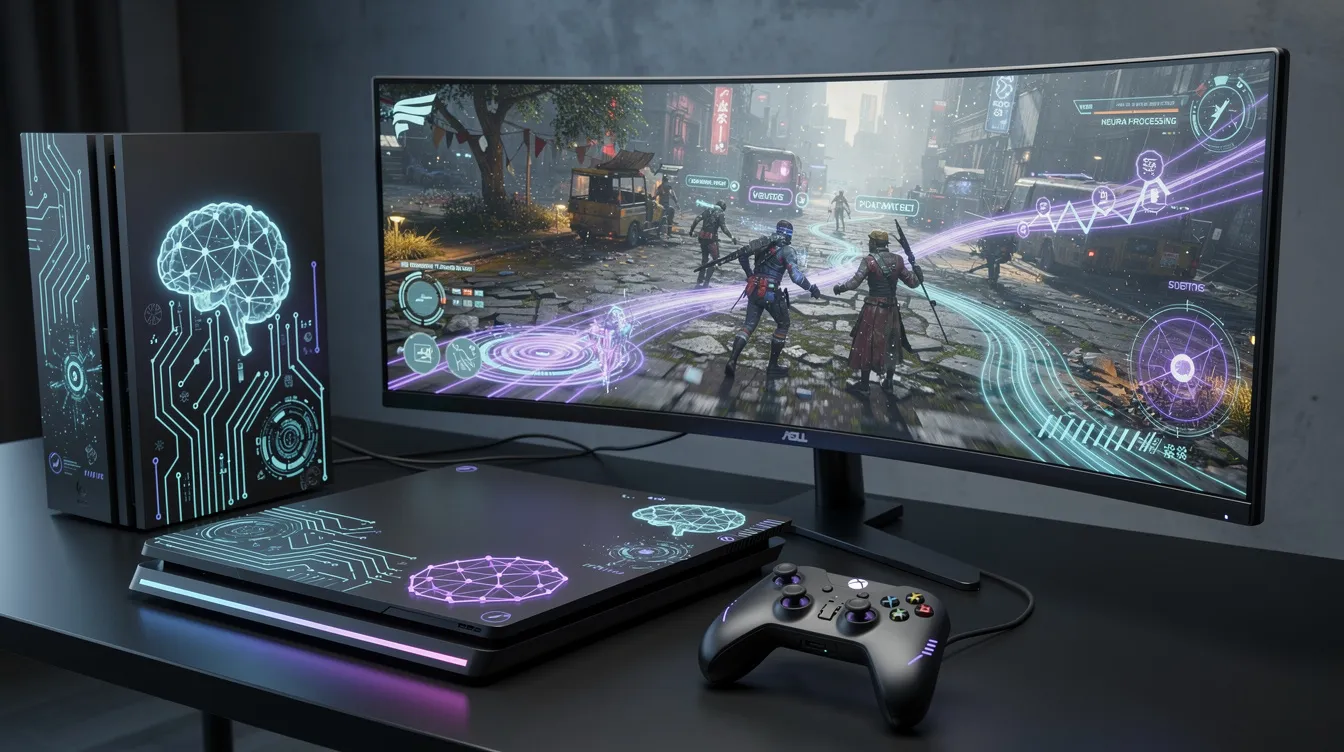
Regulatory and platform changes seem inevitable. Stricter disclosure of ai-generated game assets, clearer union rules for voice and performance, and rating boards considering ai behavior in content ratings all represent likely developments. Industry predictions suggest at least one AAA "ai-native" title announcement in 2026.
Key takeaways for the future:
Ai will expand what's possible for both large studios and solo creators
On-device models will reduce cloud dependency for runtime ai
Shorter development cycles become achievable without sacrificing scope
Long-term success depends on strong creative direction, not technology alone
Ethical guardrails and thoughtful player-centered design remain essential
Ai's role will be augmentation, not replacement, of human creativity
Conclusion: Using AI to Build More Human, More Memorable Games
Ai touches every layer of modern video game development. From smarter non playable characters that instantly recognize and remember player strategies to procedural generation systems creating entire worlds, from production pipelines where ai tools accelerate coding, art, and testing to analytics platforms optimizing live service games—the transformation is comprehensive and accelerating.
The central argument remains clear: ai is most powerful when it augments human creativity rather than replacing it. Game developers who master these tools can build richer experiences faster, whether they work at major game studios or as independent creators. Rockstar Games crafting the next Grand Theft Auto will leverage these technologies differently than a solo developer building small games, but both benefit from allowing developers to focus on what matters most—creating memorable experiences.
For studios and aspiring game dev professionals, the path forward starts with experimentation. Build small prototypes using ai tools, focusing on clear design goals rather than technology for its own sake. The mit technology review and similar publications document new capabilities monthly—staying current matters. Portfolio projects demonstrating ai-driven systems, whether Nemesis-style npc memory or procedural world building, increasingly distinguish candidates.
The next decade of games will be more personalized, more systemic, and more accessible to diverse creators than ever before. This future depends on responsible, intentional use of ai—tools that amplify rather than diminish the human feel that makes games matter. The studios and developers who understand this balance will create the experiences players remember.
For hands-on implementation, see our guide to Roblox lighting and atmosphere for professional-quality visual setups. To see these principles in action, explore how Simplified's Adellion Forge pipeline applies AI-driven optimization to Roblox asset creation. For hands-on 3D modeling skills, our beginner-friendly Blender guide covers everything from interface basics to export workflows. Developers building for the web should also read about bridging games and websites with Next.js 15 and React Three Fiber. For studios building multiplayer experiences that span platforms, our cross-platform player identity guide covers the identity layer that ties it all together. And for coverage of what AI-powered game development looks like on Roblox specifically, Endsights' Auntie Atom preview details the 100-player horror game built using these techniques.
Persistent player data is the other half of a shipping-quality Roblox game. Our Roblox DataStore patterns guide covers session locks, BindToClose, versioning, and the race conditions that silently corrupt player saves.